
Why Every Productivity App Has Failed You (And It's Not Your Fault)
You've downloaded the apps. You've set up the systems. You've colour-coded the Notion databases and bought the planners and tried the Pomodoro timer. And then, somewhere around day three, it all fell apart. If this sounds familiar, here's what nobody is telling you: the apps were never built for your brain.
The Myth of the Universal Brain
Almost every productivity system ever created — from Getting Things Done to Atomic Habits to every task manager on the App Store — was designed around a neurotypical model of motivation.
That model assumes:
- Motivation is consistent and linear
- If you set a goal and track it daily, you'll build a habit
- Missing a day is a minor setback, not a catastrophe
- The right system, applied with enough willpower, will work for anyone
For most people with ADHD, none of this is true.
ADHD brains are not lazy brains. They are interest-driven, urgency-driven, emotionally-driven brains. Dopamine works differently. The internal sense of time works differently. The ability to start a task — even one you genuinely want to do — works completely differently.
So when you open a task manager and see seventeen overdue items glaring at you in red, your brain doesn't respond with “better get started.” It responds with paralysis, shame, and a very strong urge to close the app and never open it again.
The Streak Problem
Streaks are one of the most popular engagement mechanics in productivity apps. The logic makes sense: reward consistency, punish interruption, build habits through repetition. For neurotypical users, this works reasonably well. For ADHD brains, it's often actively harmful.
When you break a 30-day streak — because life happened, because you forgot, because your brain simply wouldn't cooperate that day — it doesn't feel like a minor setback. It feels catastrophic. It triggers the kind of shame spiral that can keep you from opening the app for weeks.
The app punished you for being human. And your brain filed that away as “this thing makes me feel bad” — which is the end of any habit.
Rigid Structure vs. Flexible Structure
Most productivity apps offer one kind of structure: rigid. You set a routine. You follow it. If you don't follow it, you fail. But ADHD doesn't work on a consistent schedule. Some days your brain is firing on all cylinders. Other days, getting out of bed feels like climbing Everest.
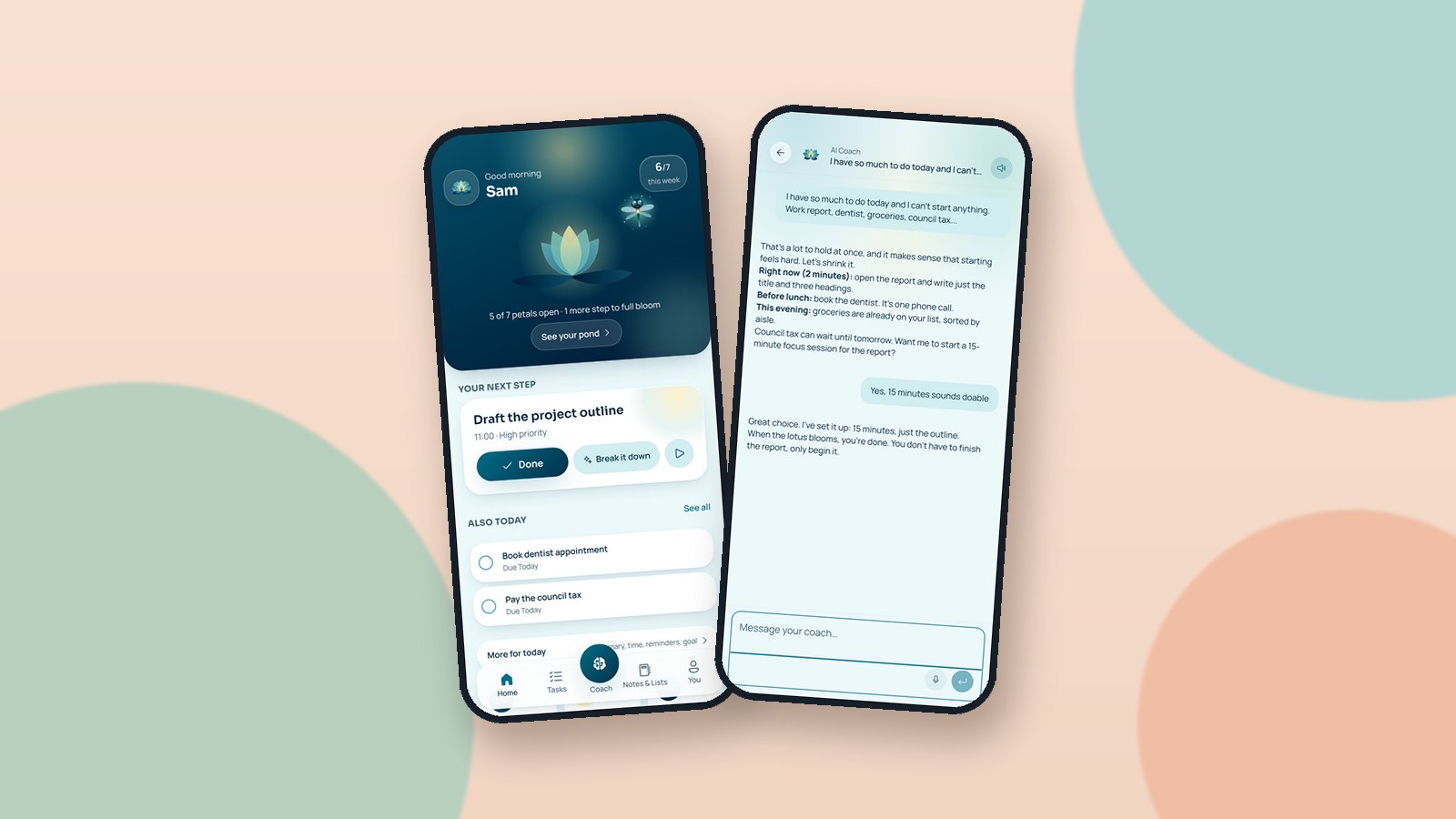
What ADHD brains actually need is flexible structure: a framework that holds your intentions without punishing you for being human.
What Would Actually Help
If productivity apps were designed for ADHD brains, they would:
- Meet you where you are on any given day, not where the system expects you to be
- Remove shame from the equation entirely
- Help you start tasks, not just track them
- Understand that time blindness is real and plan around it
- Offer coaching that actually understands ADHD
- Celebrate progress, not perfection