
What ADHD Actually Feels Like When You're Trying to Get Things Done
The textbook definition of ADHD talks about inattention, hyperactivity, and impulsivity. What it doesn't tell you is what it actually feels like. The paralysis. The shame. The exhaustion of spending twice as much energy as everyone else just to do ordinary things, then being told you're not trying hard enough. This is that story.
Task Paralysis
You have a task. It's not even a hard task. Maybe it's an email you need to send, or a form you need to fill in, or a phone call you've been putting off.
You know you need to do it. You want to do it. You might even be thinking about it constantly.
And yet, you can't start.
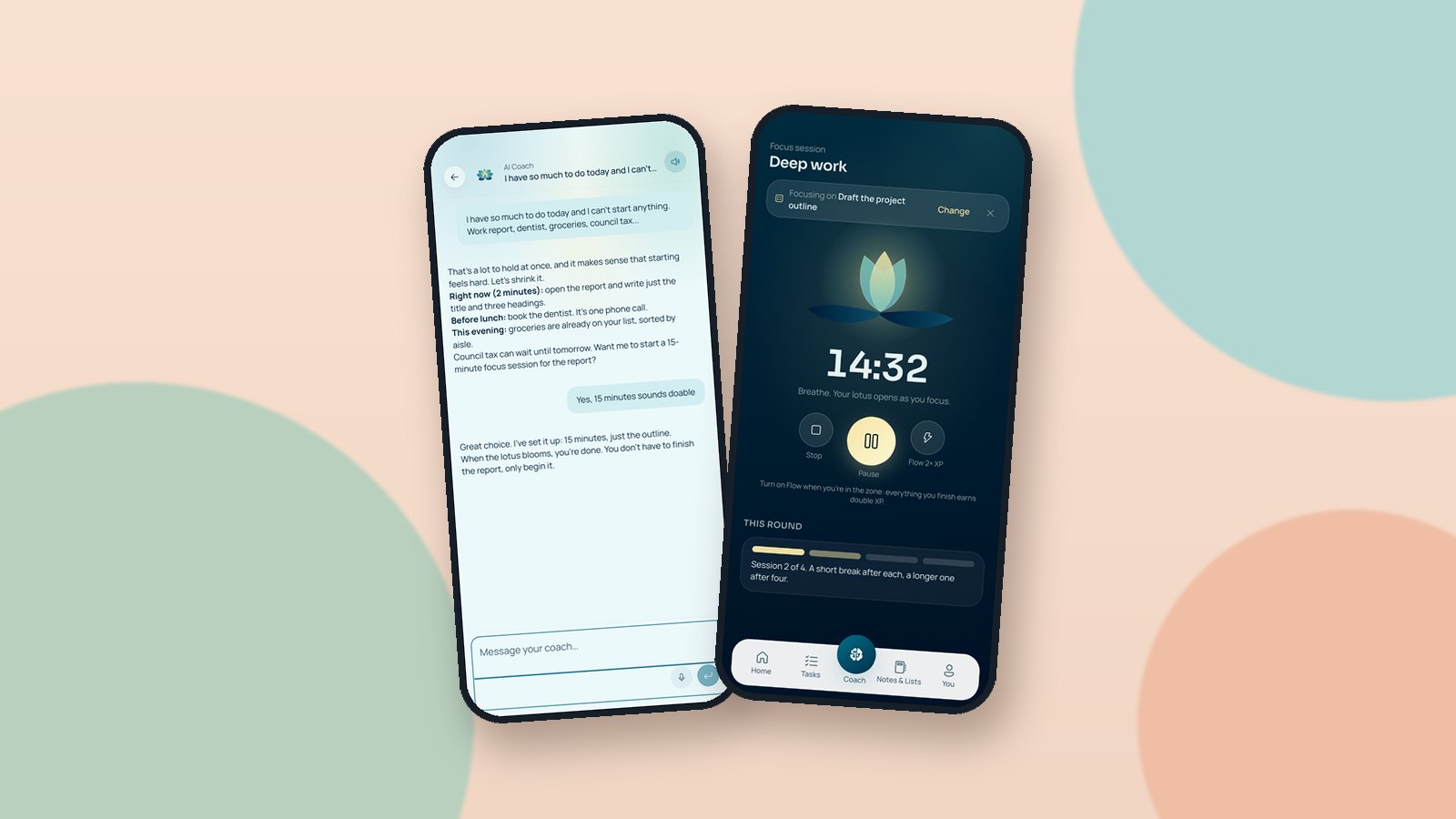
This is task paralysis — one of the most common and least understood aspects of ADHD. It's not laziness. It's a genuine neurological difficulty initiating tasks that don't provide immediate stimulation or reward. The ADHD brain needs a certain level of interest, urgency, challenge, or passion to activate. When a task doesn't provide any of those things — even if it's important — the brain simply won't engage.
And the harder you try to force it, the worse it gets.
Time Blindness
People with ADHD often experience what's called time blindness — an impaired sense of time passing. For most people, time is a river they can feel flowing. They have an intuitive sense of how long things take, how much time has passed, when they need to leave.
For many ADHD brains, time is more like a light switch: there's now, and there's not now. The meeting is either happening or it isn't. The deadline is either today or it's in the abstract future. This makes planning incredibly difficult — and makes it nearly impossible to feel the urgency that motivates most people to start tasks early.
Rejection Sensitive Dysphoria
Rejection sensitive dysphoria (RSD) is an intense emotional response to perceived rejection, criticism, or failure. It's extremely common in people with ADHD and it can be completely overwhelming.
A critical comment from a manager. A friend who doesn't respond to a message. A presentation that didn't land the way you hoped. For most people, these things sting and then pass. For someone with ADHD and RSD, they can feel genuinely devastating — triggering a spiral of shame, self-criticism, and withdrawal that can last for days.
This is why shame-based productivity mechanics — streaks, red overdue tasks, “you've been inactive for 14 days” notifications — are not just ineffective for ADHD brains. They're actively harmful.
The Exhaustion of Masking
Many people with ADHD spend enormous amounts of energy masking. Appearing organised when they're not. Staying still when every instinct says move. Laughing off the forgotten appointment instead of explaining the paralysis that led to it.
Masking is exhausting. And it means that by the time you sit down to actually do the things you need to do, you're already running on empty.
Nothing is wrong with you. You just need the right tools, the right environment, and the right support.