
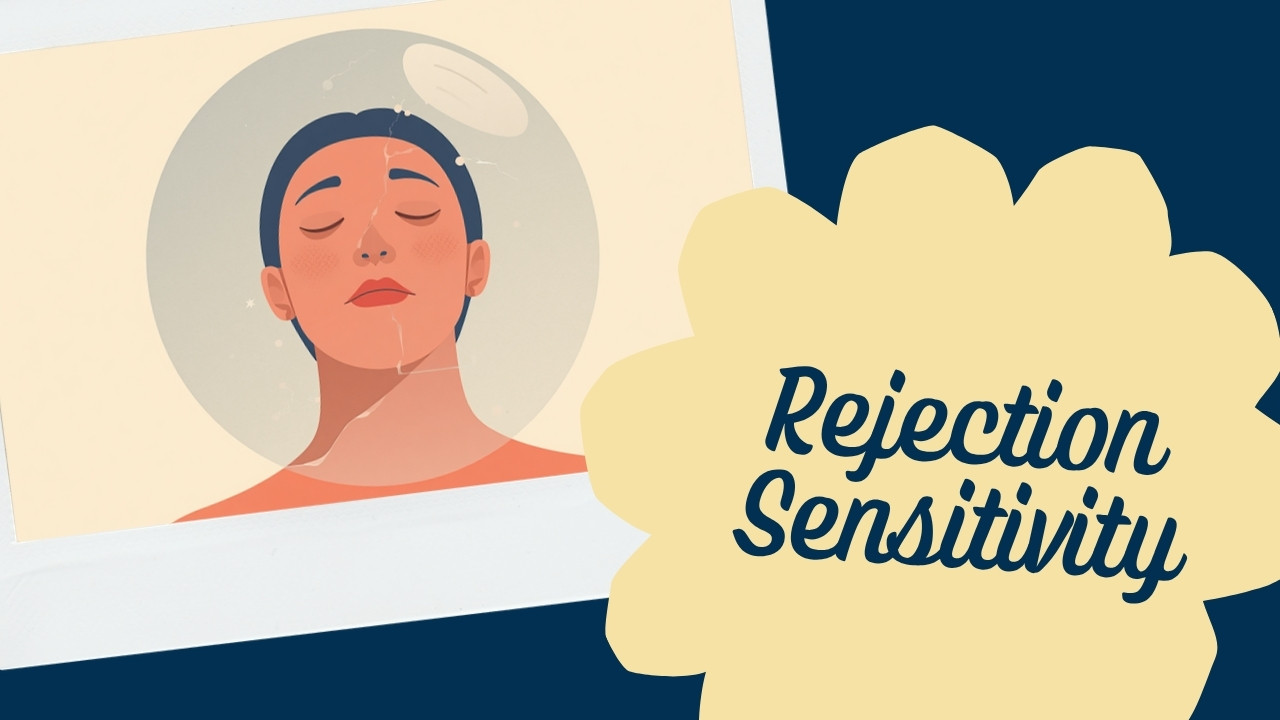
The Feeling You Can't Explain: Rejection Sensitive Dysphoria and ADHD
Your friend takes three hours to reply to a text and your stomach drops like you've done something wrong. Your manager says "can we chat for a sec" and your whole afternoon is gone before the meeting even happens. A joke lands slightly wrong in a group chat and you're replaying it at 2am, certain everyone secretly hates you now. If any of this sounds familiar, you're not "too sensitive," and you're not overreacting. There's a name for this, and if you have ADHD, there's a good chance it's been shaping your relationships, your career, and your self-esteem for years without you ever having the word for it: rejection sensitive dysphoria.
What RSD actually is
Rejection sensitive dysphoria (RSD) describes an intense, often overwhelming emotional response to perceived or real rejection, criticism, or failure. The term was popularized by psychiatrist William Dodson, who noticed the same pattern showing up again and again in his ADHD patients — a pain that felt disproportionate to the moment, that arrived instantly, and that no one else seemed to understand. It's not just "feeling bad about criticism." People describe it as a physical sensation, like being punched, and it can be triggered by things most people wouldn't register as rejection at all: a shortened reply, a neutral tone of voice, someone not laughing at a joke.
Is it "real"? Here's what the research actually shows
RSD isn't listed in the DSM-5, which means there's no official diagnosis, no standardized test, and no billing code for it — and that gap has made some clinicians cautious about the term. But the underlying experience is well documented. A qualitative study published on medRxiv and in PMC in 2024 explored the lived experience of rejection sensitivity in adults with ADHD and found it was described consistently as sudden, intense, and difficult to regulate once triggered — not something people could simply reason their way out of in the moment. Other research cited by the Cleveland Clinic and ADDitude Magazine puts the number of ADHD adults who report struggling with this kind of rejection sensitivity at around 77%. That's not a fringe experience — for most adults with ADHD, it's closer to the norm.
The leading theory is that RSD isn't a separate disorder sitting alongside ADHD, but an extension of the same emotional regulation differences that show up in ADHD more broadly. ADHD brains often struggle to modulate emotional intensity once it starts — the feeling doesn't arrive smaller and build up, it arrives at full volume immediately. Rejection just happens to be one of the most common, most painful things that intensity latches onto.
RSD isn't you being "too sensitive." It's your emotional regulation system reacting to rejection at a volume most brains never have to process.
What it looks like day to day
RSD rarely announces itself by name. It usually just looks like a personality trait, or a bad day, or "being dramatic" — right up until you notice the pattern:
- A delayed reply or flat tone reading as proof that someone is angry or done with you
- Replaying a small comment or joke for hours, certain it revealed something everyone secretly thinks
- Turning down opportunities, auditions, or new projects specifically because there's a chance you might not be immediately good at them
- Becoming a chronic people-pleaser, scanning every room for what others want so you never risk their disapproval
- A flash of anger or shutdown after even gentle, well-meant feedback
- Avoiding starting a task at all, because an imperfect attempt feels like guaranteed rejection before anyone's even seen it
That last one is worth sitting with. RSD doesn't just hurt in the moment — it quietly shapes what you're willing to try in the first place, which can look a lot like procrastination or low motivation from the outside, when what's actually happening is a nervous system protecting itself from a feeling it knows will be unbearable.
What actually helps
None of this means you're stuck feeling this way forever. Clinicians and researchers point to a few things that consistently make RSD more manageable, even without a formal diagnosis to treat:
- Naming it — simply knowing RSD has a name and a pattern reduces the shame spiral that usually follows the initial hurt
- Cognitive behavioral techniques that help you catch and question the automatic "they're upset with me" thought before it takes over
- Mindfulness or self-compassion practices that create a few seconds of space between the trigger and the reaction
- Talking to a doctor or therapist familiar with ADHD, since some people find certain ADHD medications ease the intensity of the emotional spike alongside therapy
- Reducing ambiguity where you can — vague feedback or uncertain silence is often more painful than direct, specific information, even when that information is critical
You don't need to become a different person, and you don't need to stop caring what people think. You just need tools that work with a nervous system that feels things at full volume — not against it.